
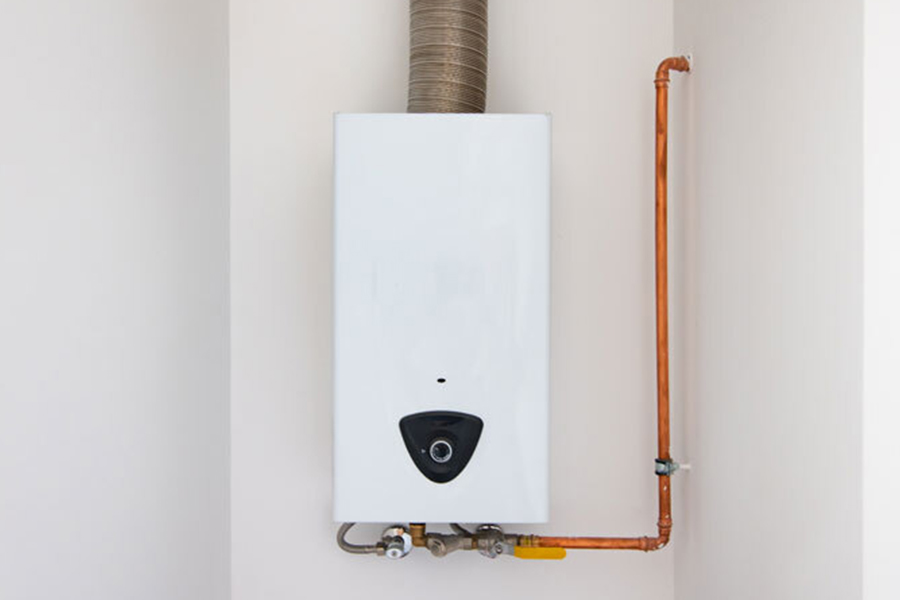
Tankless water heaters have become more popular across Massachusetts. Property owners choose these modern marvels with most upgrades and new construction projects. They’re compact and energy efficient and provide virtually unlimited hot water on demand.
As the community’s trusted plumbers in Berlin, MA, we’re often asked, “Does a tankless water heater need maintenance?” While tankless systems require less attention than traditional tank-style heaters, they’re not completely hands-off. Regular upkeep is essential if you want your system to last, operate efficiently, and avoid expensive repairs.
Why Maintenance Is Essential for Tankless Water Heaters
Traditional water heaters must hold heated water and regularly reheat it until needed. Tankless water heaters only heat water when it’s needed. As cold water flows through a heat exchanger, it’s instantly heated by a gas burner or electric element and sent directly to your tap.
It’s a smart, energy-efficient system, but the way it works means it needs routine expert maintenance.
As water heats rapidly in the unit, minerals like calcium and magnesium can form deposits inside the heat exchanger. This mineral buildup acts like insulation, reducing heat transfer and forcing the system to work harder.
It can eventually lead to increased energy use and utility bills, along with less consistent water temperatures. You may also experience system shutdowns for safety and see error codes on the system display.
The Role of Water Quality in Berlin, MA
The local water quality in our community can greatly impact your maintenance schedule. Central Massachusetts typically has moderately hard water, which means higher concentrations of minerals that lead to scale accumulation.
Does a tankless water heater need maintenance when it uses hard water? The harder your water, the faster the scale can build up inside your system and the more frequently you’ll need to clean it. Even if you don’t notice visible signs like cloudy glassware or white residue on faucets, those minerals can still cause damage inside your tankless unit.
Homeowners with especially hard water often find that installing a whole-home water softener or pre-filter can reduce mineral buildup and protect plumbing and appliances. However, even softened water systems still need occasional service.
Flushing and Descaling: The Core of Annual Maintenance
The fundamental services that prevent mineral buildup and water heater damage include flushing and descaling.
Flushing involves circulating a cleaning solution — usually food-grade vinegar or a specially designed commercial descaling product — through the unit. This dissolves the scale inside the heat exchanger and restores the unit’s efficiency.
Descaling refers to breaking down and removing mineral deposits from the system. Together, these steps form the most important part of maintaining your tankless water heater.
Most manufacturers and plumbing professionals recommend annual maintenance to prevent issues and keep your warranty valid. If your home has very hard water, you may need to flush the system every six months.
Signs It’s Time for Maintenance
Does a tankless water heater need maintenance soon? Look for these common red flags that signal it’s time to schedule professional maintenance as soon as possible:
- Inconsistent water temperatures
- Lower water pressure or flow
- Strange noises from the unit
- Error codes on the display
- It’s been more than a year since your last service
What’s Included in a Professional Service Visit?
When you call a licensed plumber in Berlin, MA, like A&L Plumbing, Heating, and Cooling, here’s what you should expect during a typical maintenance visit:
- Flushing and descaling the system
- Inspecting the heat exchanger for scale and corrosion
- Cleaning or replacing the inlet water filter
- Checking the burner, ignition components, and exhaust vent (for gas models)
- Reviewing any system error codes
- Testing safety components like the pressure relief valve
In addition to scheduling regular professional maintenance, consider extending the life of your tankless water heater by installing a water softener if your home has hard water. Use a pre-filter to catch sediment before it enters the unit. Check the filter on your water heater at least every 90 days and clean it if needed.

Final Thoughts: Keep Your Tankless Water Heater Running Strong in Berlin, MA
So, does a tankless water heater need maintenance? It does, and skipping it can lead to costly repairs, higher utility bills, or even system failure. With Berlin’s water quality contributing to faster mineral buildup, local homeowners need to stay on top of annual maintenance.
Read our other posts for useful maintenance topics, like our guide to flushing water heaters.
Need help with your tankless water heater in Berlin, MA? A&L Plumbing, Heating, and Cooling is here to help — backed by years of experience and a commitment to honest, dependable service.
What Is the Lifespan of a Typical Heat Pump?
You’re looking at around 15 years for the typical lifespan of a heat pump. However, with regular maintenance and care, extending its service life to even 20 years or more is possible.
Are There Any Government Incentives for Installing Heat Pumps?
Yes, there are several government incentives for installing heat pumps. These include tax credits and rebates, which vary by state. It’s worthwhile to research local programs to maximize your installation savings.
Are Heat Pumps Effective in Extremely Cold Climates?
Yes, heat pumps are effective in extremely cold climates. They’re designed to extract heat from the outside air, even when it’s below freezing, and circulate it inside your home, providing efficient and economical warmth.
Can Heat Pumps Provide Cooling During Summer?
Yes, you’re spot on! Heat pumps aren’t just for winter. They provide cooling during summer, too, fundamentally functioning as air conditioners. They’re incredibly efficient, making them an excellent option for year-round comfort.
Does the Installation of a Heat Pump Require Any Major Home Modifications?
No, installing a heat pump doesn’t require significant home modifications. It’s usually a straightforward process. However, you’ll need a suitable location outside for the external unit; some ductwork might be needed inside.