

Heating Services in Sherborn, MA
- 24/7 Availability
- Family Owned & Operated
- Known for Honesty & Integrity


Furnace Repair in Sherborn, MA — Rural Service With Real Expertise
Sherborn is one of the most rural towns in Middlesex County, with more than half its land under conservation protection and a housing density that's among the lowest in the region. Homes here sit on large wooded lots, many at the end of long private drives, and the town's character reflects a community that values its distance from suburban sprawl. The housing ranges from historic farmhouses and antique colonials near the town center to substantial custom homes built on wooded acreage over the past four decades.
When the furnace goes out in a Sherborn home, the distance from town services and the exposure of larger properties to winter cold makes the situation urgent fast. Test of Time Plumbing, Heating, Air & Electrical comes to Sherborn prepared to handle what we find — whatever the system, however long the driveway.
Our Services
Why Homeowners in Sherborn, MA Trust Us
What Furnace Trouble Looks Like in a Sherborn Home
Sherborn's wooded, rural setting means homes here deal with heating conditions that differ from more developed towns. Canopy cover keeps ground moisture elevated, open acreage allows wind to work against exposed elevations, and properties that sit in low terrain near Farm Pond and the Charles River headwaters stay damp in their foundations through much of the heating season. These conditions shape how furnace problems develop and how quickly they escalate:
- The furnace is cycling normally but the house temperature drops faster than usual overnight — a sign the building envelope is losing heat faster than the system can replace it.
- There's visible rust or white mineral staining on the flue pipe or around the base of the furnace, pointing to moisture intrusion in the mechanical room.
- The oil tank gauge is dropping faster than expected, suggesting the furnace is burning more fuel than it should to maintain temperature.
- The system ignites successfully but shuts off within a few minutes on very cold nights — often caused by a limit switch tripping from high heat demand.
- Rooms at the far end of long duct runs — common in Sherborn's larger homes — are noticeably colder than areas near the furnace.
- The property has changed hands and the new owners don't know when the furnace was last serviced.
In a rural town like Sherborn, staying ahead of these signs matters more than in a neighborhood where help is five minutes away. Don't wait for a full failure to make the call.


Sherborn's Conservation Landscape and What It Means for Heating Systems
The wetlands, ponds, and forested conservation parcels that define so much of Sherborn’s landscape create a moisture environment that’s different in character from more developed towns. Ground moisture in Sherborn doesn’t have pavement and drainage infrastructure to redirect it — it moves slowly through the soil and finds its way into the stone and concrete foundations of older properties in particular. Older farmhouses near the town center with root cellars or rubble-stone foundations often have the dampest mechanical rooms we encounter in the region, and the furnaces in those spaces show it in accelerated external corrosion on heat exchangers and flue liners.
The town’s custom homes on larger lots present a different challenge. Many were built with heating systems sized for the original floor plan and have since had additions, finished basements, or bonus rooms that added significant square footage. A furnace that was correctly sized in 1995 may now be meaningfully undersized for the home it’s trying to heat — which shows up as long run times, uneven temperatures, and premature component wear from sustained overexertion.

Furnace Repair That Comes to You in Sherborn
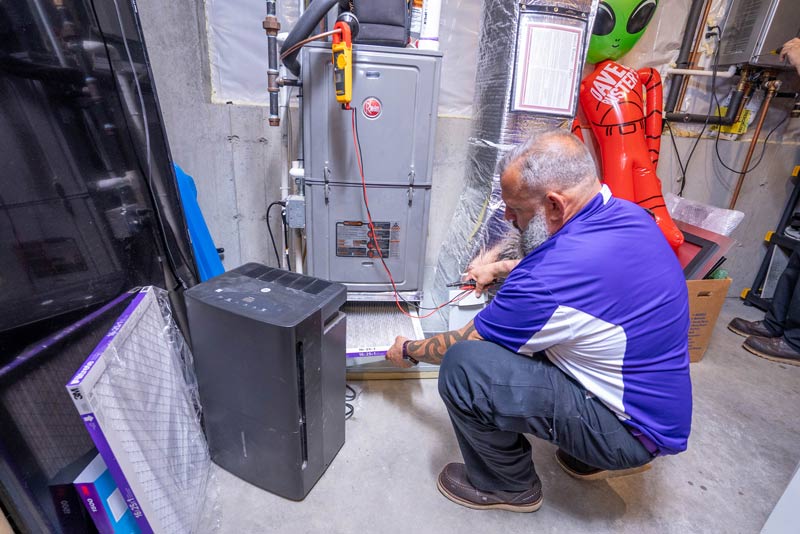
We travel to Sherborn for all types of furnace repairs, including properties that are difficult to reach in winter conditions. Gas and oil furnaces, older farmhouse systems, modern equipment in larger custom homes — our technicians come prepared to work with whatever they find. Most repairs are completed the same day, and we'll give you a clear assessment and firm price before we start any work.
If a system has reached the point where repair is a short-term answer, we'll tell you that directly and help you think through replacement on your timeline, not ours. Flexible financing is available, and our membership plans bring annual maintenance to rural properties that often go years between professional service visits.
A Farmhouse Call Near Farm Pond
We received a call from Thomas on a January morning. His farmhouse near Farm Pond in Sherborn had lost heat overnight — the oil furnace had shut off and the house was down to 48 degrees by the time he called. He was worried about pipes in the uninsulated section of the original ell.
Our technician navigated the long drive and found a fuel delivery issue caused by a frozen oil line running along an exterior wall with no insulation wrap — a problem common to older rural properties where the original oil system was installed without accounting for how cold those exposed runs get. The line was thawed and insulated, the burner was cleaned while we were there, and the system was running fully within two hours of arrival. Thomas appreciated the honesty about what caused the problem and the practical fix that would prevent it from happening again next winter.
What Test of Time Plumbing, Heating, Air & Electrical Brings to Every Sherborn Service Call
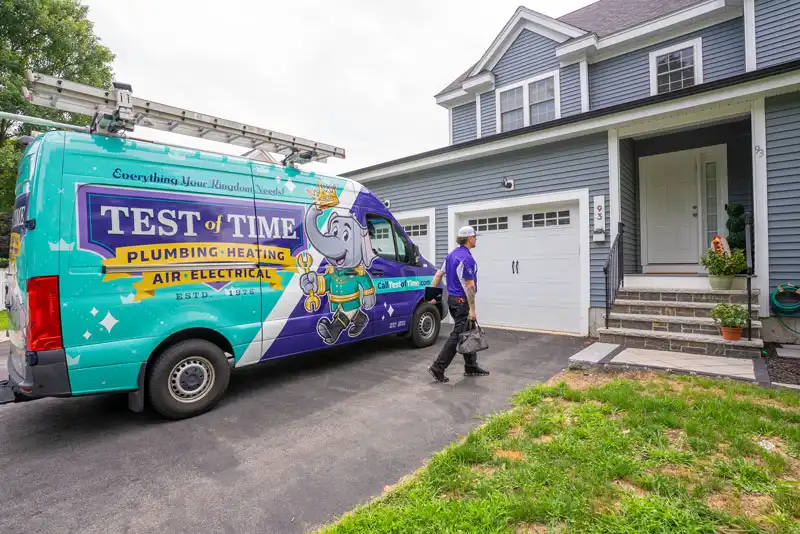
Sherborn homeowners who call Test of Time Plumbing, Heating, Air & Electrical get a family-owned team that takes the job seriously and treats every property with care. We understand that rural service calls require more preparation and more flexibility — and we come ready for both. The values we were founded on show up in every job we take, whether it’s a straightforward repair or a complicated situation in a 200-year-old farmhouse.
- 24/7 emergency service, every day of the year, including difficult winter conditions.
- Fully licensed and insured on every job.
- Honest diagnostics and upfront pricing before any work begins.
- Flexible financing for larger repairs and unexpected replacements.
- Membership plans with annual maintenance for properties that benefit from consistent, scheduled service.
We treat Sherborn homes the way we’d want our own treated — with care, honesty, and work that holds up over time.
Frequently Asked Questions
Can an oil line freeze in cold weather and cause the furnace to stop?
Yes. Oil lines that run along uninsulated exterior walls or through unheated spaces can freeze in extreme cold, cutting off fuel supply to the burner. Insulating exposed lines and ensuring fuel quality with proper additives for cold weather are the most effective preventive measures.
My furnace was sized for a smaller home. Can I still repair it, or do I need to replace it?
An undersized furnace can be repaired when components fail, but it will continue to run harder than it should and age faster than a properly sized system. Whether repair or replacement makes more sense depends on the age of the equipment, the cost of repair, and how significantly the home’s square footage has grown. We’ll walk you through that analysis honestly.
How do damp stone foundations affect furnace components specifically?
Stone and rubble foundations allow more moisture vapor into the basement than poured concrete, which keeps ambient humidity higher year-round. That sustained moisture exposure accelerates oxidation on heat exchanger surfaces and flue pipe connections, particularly at joints and seams where dissimilar metals meet. Annual inspection in these environments catches developing corrosion before it causes a failure.
Do you travel to rural Sherborn properties at the end of long private driveways?
Yes. We serve all of Sherborn including properties with long private drives. We come prepared for rural access, including winter conditions that make some roads and drives more challenging.
What maintenance does an oil furnace in a rural home need annually?
An annual oil furnace service should include replacing the nozzle and fuel filter, cleaning the burner and heat exchanger, inspecting and cleaning the flue, checking the oil pump and electrodes, and testing all safety and operational controls. In homes with older or exposed oil lines, the line routing and condition should also be evaluated.