

That smell of sewage hitting your nose upon entering your home is one of the most uncomfortable experiences you’ll ever have. It’s even more frustrating when it lingers and you can’t work out where it’s coming from.
That odor throughout your space is a clear sign of a problem somewhere in your plumbing or drain system. Some causes are minor, while others point to a larger issue that needs professional attention. In our service calls throughout Watertown, from homes near Watertown Square to properties along the Charles River, we see this exact complaint come up again and again, especially in older homes with aging plumbing infrastructure.
In this post, the licensed plumbing team at Test of Time breaks down what causes sewer gas smell in the house and what a professional evaluation typically uncovers.
1. You Have Dry P-Traps Around Your Watertown, MA, Home
You’ve probably never paid much attention to the curved section of pipe connecting your sink or toilet to the wall. That curve is called a P-trap (or S-trap, depending on the shape), and it’s designed to hold a small amount of water at all times. That trapped water acts as a barrier, keeping sewer gases from rising back into your home.
When water in the trap evaporates or drops too low, whether from an unused guest bathroom or a fixture that hasn’t run in a while, sewer odor can escape into the room. In homes across Watertown that sit vacant for stretches of time, such as seasonal rentals near Arsenal Street, this is one of the more common culprits our technicians find during an inspection.
2. You Have a Clogged or Broken Vent Pipe
Every plumbing system relies on vent pipes to release sewer gases safely outside the home, typically through a stack that exits the roof. When a vent pipe becomes clogged or damaged, those gases have nowhere to go but back into your living space.
Vent pipes can crack over time due to age, weather exposure, or foundation shift, and they can become blocked when debris, leaves, or nesting animals settle inside them. If the odor seems strongest on the upper floors of your home, a blocked or damaged vent stack is often the cause, and it’s not something that can be diagnosed safely from the ground.
3. You Have a Clogged Drain
Clogged drains trap organic matter, grease, and debris, creating an environment where bacteria thrive. As that bacteria breaks down the trapped waste, it releases the sulfur-like odor many homeowners associate with sewer gas.
Rather than reaching for a store-bought drain cleaner or a plumbing snake, which can push debris deeper into the line or damage older pipes, it’s worth having a professional drain cleaning performed. Our technicians use equipment designed to clear the full length of the line, not just the visible clog, so the smell doesn’t return a few weeks later.
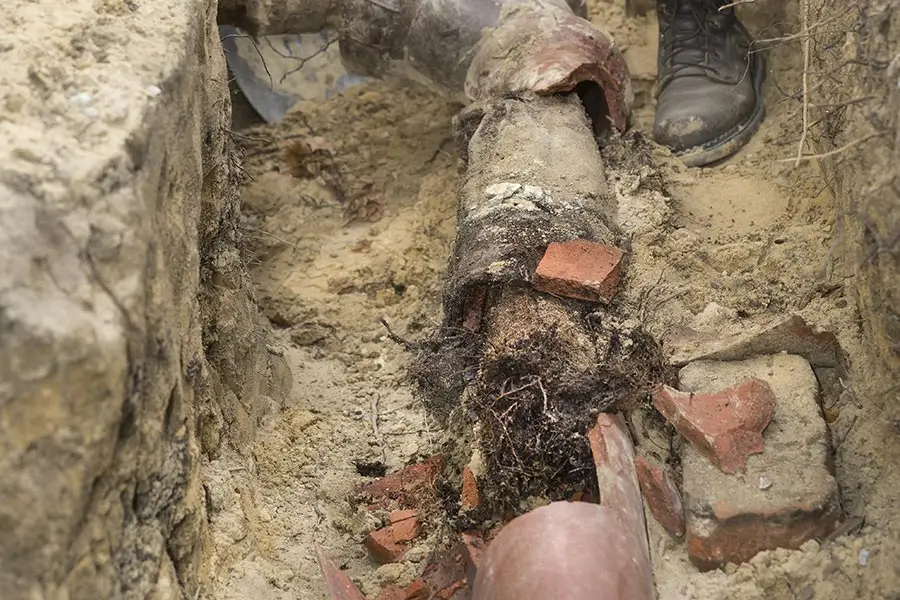
4. You Have a Cracked Sewer Line
Have you noticed slow drains, standing water in your yard, or unusually lush patches of grass in addition to the odor? That combination of symptoms often points to a cracked sewer line.
Sewer lines can crack due to age, corrosion, shifting soil, or tree root intrusion, all of which are common in Watertown’s older neighborhoods with mature tree canopies. This is not a repair to put off. A cracked line can worsen quickly and lead to far more expensive damage, so it’s worth having a technician assess the line as soon as you notice these signs.
5. Your Toilet Seal Is Loose
If the smell seems concentrated near the bathroom, your toilet may be the source. Toilets rely on a tight seal at the base, usually formed by a wax ring, to keep sewer gases from escaping around the fixture.
Poor installation or a deteriorating wax ring can compromise that seal over time. A wobbling toilet or a persistent odor near the base is a sign the seal needs to be replaced. Since removing and resetting a toilet involves working around the main drain line, this is best left to a licensed plumber who can confirm the flange and seal are both in good condition before resealing.
6. You Have Loose Plumbing Connections
Joints between plumbing pipes can loosen gradually due to age, temperature changes, and everyday wear. Those small gaps are often enough to let sewer gas seep into your walls or floors. Routine plumbing inspections and maintenance catch this kind of wear before it turns into a persistent odor problem or, worse, a leak.
Keeping Sewer Gas Out of Your Watertown Home
What causes sewer gas smell in the house? As you’ve seen, there are several possible sources, ranging from a simple dry trap to a cracked sewer line. Regardless of the cause, one thing is certain: the smell is a sign your plumbing system needs attention, and it’s not something to leave unaddressed. Left alone, these issues can also point to or lead to a water leak that causes further damage to your home.
At Test of Time Plumbing, Heating, Air & Electrical, our experienced technicians can track down the source of your sewer odor and resolve it correctly the first time, whether that means clearing a line, resealing a toilet, or repairing a cracked pipe. If you’re noticing that smell anywhere in your Watertown home, contact our team today to schedule a consultation.